Much of the discussion of the benefits of blended and self paced/mastery learning comes from an assumption the biggest factor that limits students' ability to succeed is that each student learns at a different pace and learns best in different ways.
There's no doubt that there is some truth in this, but from what I've seen, the single most important factor that affects students' ability to succeed is not that they learn at different paces, but that they work at different paces. In other words, the level of effort put forth seems to make the most difference. If a student doesn't work hard enough, there are most likely going to be problems no matter what type of instruction is provided. Moreover, slowing down the pace (through self pacing) for some of these students has not seemed to help, but rather to enable them to fall further and further behind. It seems like they work harder when we all move together at the same pace.
While there are definitely benefits to self paced and blended learning, the challenges should not be ignored. One of the biggest challenges is that slowing down (through self pacing) for a student who is working hard but needs extra help is useful, but slowing down (through self pacing) for a student that is not working hard enough is actually harmful.

Teachers from The Meadows School in Las Vegas reflect on using Khan Academy and other online resources to enhance learning in their classrooms.
Thursday, April 24, 2014

Monday, April 21, 2014
Practice Problems on Khan
One type of homework I assign is to do certain practice problem sets on Khan Academy. From September - November I was having difficulty motivating the students to do enough problems to understand the concept completely. For example, I would assign ten problems for completion points. Most students would complete their ten problems (some would only spend seconds on a problem) but it wouldn’t matter to them if they got them correct or not. Therefore, the student wasn’t receiving a full understanding of the material.
In December, I changed the requirement. I assigned a minimum of ten problems but I took the ten problems for a percent grade. In addition, I allowed students to do more than ten to raise their grade. This changed the student attitude completely. Most students now complete as many problems as he/she needs individually to understand the type of problem being presented. Some students will get the first ten correct and be finished. Others, now spend the time they need to be prepared for class the next day.
In conclusion, I have found students seem to be motivated by the grade more than anything else.
Friday, March 28, 2014
Library time = Free time?
Lately, I've been more skeptical of the effectiveness of having all students work in a blended environment. Among the other things that I've been concerned with is that many students treat their library time as "study hall" for whatever work they need to get done from various classes. This would be fine if they could manage their time effectively and spend enough time doing their physics on their own time. Some students can do this, and have demonstrated an impressive level of discipline. However many students have demonstrated they don't yet have this level of discipline. That doesn't mean blended learning isn't a nice option for some students, but trying to force all students to do this seems fraught with peril.
I could of course constantly walk around the library and make sure students are working the whole time, but that somewhat defeats the purpose of a blended class.
Perhaps our students just aren't used to it, and need to get used to working in a blended learning environment. Maybe if they had dealt with this type of learning more they would perform better. Regardless, the traditional way of learning is so ingrained for some of our students that trying to make blended learning work for them feels as productive as trying to hold back the tides.
I could of course constantly walk around the library and make sure students are working the whole time, but that somewhat defeats the purpose of a blended class.
Perhaps our students just aren't used to it, and need to get used to working in a blended learning environment. Maybe if they had dealt with this type of learning more they would perform better. Regardless, the traditional way of learning is so ingrained for some of our students that trying to make blended learning work for them feels as productive as trying to hold back the tides.
Tuesday, March 18, 2014
Self paced mastery learning is great and it's also a disaster
I've been using a variation of mastery learning in both my blended course and regular courses, where students don't move on from a topic until they mastered it. They would watch videos on a topic, and then progress at their own pace through lab activities, conceptual questions, and problem sets.
It was great because it allowed me the time during class to interview students during each step of their progression to identify any misconceptions. And it prevented students from moving on until they proved that they really understood.
It was a disaster because at least half of the students were unable to work at a decent pace and budget time accordingly without putting everything off until the last possible moment. Even when I gave zeros in the gradebook if they didn't complete something that day, many students still could not manage to move at a steady pace.
I really wish it would have worked. The personal interviewing component at every step was so powerful it is hard to abandon it. But people seem to need a hard deadline at a particular point in time for each assignment in order to muster the motivation to get anything done. This sounds obvious to me now. I guess I was blinded by all the potential benefits that self pacing can provide (mastery learning, more one on one time with students, etc.)
So, I am also going back to using a more traditional non-self paced, non-mastery based class with hard deadlines. We will all move together through the material at the same speed. Some students will have to move on before they are ready, but we should be able to move at a respectable pace now. Plus the students are actually welcoming the change. They know that most of them need a rigid deadline for each assignment or they won't get it done.
It was great because it allowed me the time during class to interview students during each step of their progression to identify any misconceptions. And it prevented students from moving on until they proved that they really understood.
It was a disaster because at least half of the students were unable to work at a decent pace and budget time accordingly without putting everything off until the last possible moment. Even when I gave zeros in the gradebook if they didn't complete something that day, many students still could not manage to move at a steady pace.
I really wish it would have worked. The personal interviewing component at every step was so powerful it is hard to abandon it. But people seem to need a hard deadline at a particular point in time for each assignment in order to muster the motivation to get anything done. This sounds obvious to me now. I guess I was blinded by all the potential benefits that self pacing can provide (mastery learning, more one on one time with students, etc.)
So, I am also going back to using a more traditional non-self paced, non-mastery based class with hard deadlines. We will all move together through the material at the same speed. Some students will have to move on before they are ready, but we should be able to move at a respectable pace now. Plus the students are actually welcoming the change. They know that most of them need a rigid deadline for each assignment or they won't get it done.
Tuesday, March 11, 2014
Going Old School
Recently in Intro to Economics, I've reverted to teaching, as the kids would say, "old school." Based on student feedback and performance, they've displayed an aptitude for succeeding in a traditional classroom environment. With this particular group of students, collaborative learning is a key to their success, and for them, that means having the opportunity to ask questions, engage in discussion, as well as have specific problems with each piece of new content.
To facilitate learning over the past several weeks, I've taught with a traditional textbook, assigned readings, and supplemented those readings with practice problems for each chapter. Students both succeeded with this method (they scored well on quizzes) as well as seemed more comfortable.
I attempted to supplement their readings with videos from Khan Academy, but students expressed the concepts to be too abstract to understand without having the opportunity to discuss the answers with either myself or their classmates. As this student group consists of mostly sophomores and juniors, they may just be exhibiting a developmental preference for hands on, concrete examples of complex ideas. While the Khan videos are rich in theoretical content, they are difficult for students to grasp if such a student has difficulty with abstract thinking.
What I've noticed that students REALLY need above and beyond anything else is practice. Based on the last unit, a traditional method of teaching was more readily able to achieve that objective. However, in my next unit, I'm going to have students use digital resources to prepare a collaborative project and teach a lesson to the class. I will post my next update with this unit is completed.
To facilitate learning over the past several weeks, I've taught with a traditional textbook, assigned readings, and supplemented those readings with practice problems for each chapter. Students both succeeded with this method (they scored well on quizzes) as well as seemed more comfortable.
I attempted to supplement their readings with videos from Khan Academy, but students expressed the concepts to be too abstract to understand without having the opportunity to discuss the answers with either myself or their classmates. As this student group consists of mostly sophomores and juniors, they may just be exhibiting a developmental preference for hands on, concrete examples of complex ideas. While the Khan videos are rich in theoretical content, they are difficult for students to grasp if such a student has difficulty with abstract thinking.
What I've noticed that students REALLY need above and beyond anything else is practice. Based on the last unit, a traditional method of teaching was more readily able to achieve that objective. However, in my next unit, I'm going to have students use digital resources to prepare a collaborative project and teach a lesson to the class. I will post my next update with this unit is completed.
Friday, February 28, 2014
Too little face to face time for blended students?
I've been using interview exams at the end of each unit as an assessment. Well, I like the interviews so much (as both a summative and formative assessment) that I've incorporated them as THE fundamental pedagogical approach of my class (both blended and non blended).
Now, students are required to have brief discussions/interviews with me for every assignment, quiz, or lab that they complete. If they finish an assignment, they bring it to me, and are required to explain it. Then I ask probing follow up questions based on their responses. I carry around my ipad and give a student a grade right there on the spot. I grade students on their ability to convey understanding, but allow them to go back and study and then do another interview another time if they are unhappy with the grade they receive.
This has allowed me to uncover misconceptions held by individual students much quicker and effectively than trying to decipher whether the student understands based on just what they wrote on a piece of paper (quiz, HW, test, etc.). It has also made me concerned with the blended class. I am finding more and more that they have fundamental misconceptions on previous topics we covered compared to the other non-blended students.
I think this may be due to the fact that students who got face to face time with me everyday were constantly subjected to me pointing at their work and asking them "why did you do this?", "when won't this term be negative?", "what does this mean?" and other probing questions about the physics we're learning. The blended students only get this half the time since they meet with me every other day. This might be contributing to them getting to the correct answer on their HW and quizzes without really understanding how.
I hope that using short interviews every step of the way, and only giving credit for demonstrating understanding (rather than just turning stuff in), will convince my blended students that they should seek understanding, not just right answers. And, my real goal is to get the students to the point where they instinctively ask themselves these probing questions to analyze and self correct their own thinking. That type of precise/organized and self corrective thinking, more than any physics principle, is the main thing I want to teach my students.
Monday, February 10, 2014
Time Correlation
Recently, I have been analyzing the amount of time individual students spend on Khan Academy. As I expected, there is a definite positive relationship between their grade and the time the student spends on Khan.
Looking at the overall time spent watching the videos and practice problems on Khan, the students with the most time spent have a higher grade. If I look at the students earning A’s in the class, their time spent is on average much higher than a student earning a lower grade. In fact, the time and most of the grades directly correlate.
When I look at the time of day that a student does their homework on Khan, it correlates with their grade. It seems that students doing their homework in the morning before class are earning lower grades. For example, I have students that are doing their homework at 7:45 a.m when class begins at 8:15. It seems to reason, they are not completely absorbing the material by rushing through before the bell rings.
In conclusion, I would probably find the same results correlating time spent on homework with grades in a traditional style classroom. However, now I have data to provide me with information to help guide students to be more productive.
Wednesday, January 29, 2014
Fantasy Stock Market
My Introduction to Economics course consists of the same students from the Money, Banking and Finance class. The content is intended to be more microeconomics and project based learning. This semester students participate in a fantasy stock market, creating their own business plan, and learn the theory of the firm.
The first week back I set up students for their first project by showing them a documentary in class on the Financial Crisis of 2008. I've noticed that if I assign videos outside of class two results occur: students don't watch the video, or students don't get the full value of the film. Thus I showed the film in class to encourage dialogue and provide context.
This previous week, I've worked with students on understanding the general principles and vocabularies of financial investing. They were given self directed, independent vocabulary questions. They filled out the vocab terms to the best of their ability. While their definitions were accurate, students could not place the vocab in context or explain them in their own words. Therefore, we discussed as a class the vocab in the context of example stocks (such as Apple).
Students now have sufficient background on investing to begin exploring stocks. They've been tasked with assembling a simulated 100,000 dollar portfolio. The simulation is run through the Wall Street Journal's web page. Students are in a league with one another and are both are attempting to achieve instructor provided goals and competing with the rest of the class. Students will be given a few days of independent research time to assemble their portfolio.
I plan on using Khan videos to provide supplemental support to students who have questions about financial markets. My next post will follow the completion of this assignment.
The first week back I set up students for their first project by showing them a documentary in class on the Financial Crisis of 2008. I've noticed that if I assign videos outside of class two results occur: students don't watch the video, or students don't get the full value of the film. Thus I showed the film in class to encourage dialogue and provide context.
This previous week, I've worked with students on understanding the general principles and vocabularies of financial investing. They were given self directed, independent vocabulary questions. They filled out the vocab terms to the best of their ability. While their definitions were accurate, students could not place the vocab in context or explain them in their own words. Therefore, we discussed as a class the vocab in the context of example stocks (such as Apple).
Students now have sufficient background on investing to begin exploring stocks. They've been tasked with assembling a simulated 100,000 dollar portfolio. The simulation is run through the Wall Street Journal's web page. Students are in a league with one another and are both are attempting to achieve instructor provided goals and competing with the rest of the class. Students will be given a few days of independent research time to assemble their portfolio.
I plan on using Khan videos to provide supplemental support to students who have questions about financial markets. My next post will follow the completion of this assignment.
Monday, January 27, 2014
Students hate holes
Well, it happened. I didn't see it coming, and would have never expected it. My students like doing physics problems more than doing labs. And specifically, my students like doing Webassign online homework problems more than labs. In fact, they have been asking me over and over, "When do we get to do Webassign again?"
To put this into context, if you even mention the word "Webassign" to any of my students from previous years, they will give a long groan and say something like "Uggggh, Webassign was horrible. I hated Webassign." In fact, Webassign was probably their least favorite part of my course.
So for my students this year (blended and non-blended) to repeatedly request Webassign, and repeatedly say "I like Webasssign" with no prompting from me is absolutely mind blowing for me. And I am pretty sure I know why their experience this year is so much better than previous years.
The incremental sets of problems that I wrote over the summer are the main difference in my teaching this year. Briefly, the difference between the problems I wrote and the previous problems I used (which were just publisher problems from the back of a book), is that the problems I created were made specifically so that they can be grouped into sub-skills and ordered in a logical progression from the easiest possible problem to the hardest possible problem with very few gaps in between. This makes the number of problems assigned much larger this year than in previous years. It also makes it so that the hardest problems of a problem set are actually quite involved and complex.
But, think about what this means. Students are doing way more Webassign problems than ever before, and harder problems than ever before, and they are enjoying them more than ever before. I feel like I'm onto something here. It doesn't seem to inherently be the length of a problem set, or the difficulty of a problem set that students dislike. It is the holes in a problem set that students don't like.
My takeaway is this:
To put this into context, if you even mention the word "Webassign" to any of my students from previous years, they will give a long groan and say something like "Uggggh, Webassign was horrible. I hated Webassign." In fact, Webassign was probably their least favorite part of my course.
So for my students this year (blended and non-blended) to repeatedly request Webassign, and repeatedly say "I like Webasssign" with no prompting from me is absolutely mind blowing for me. And I am pretty sure I know why their experience this year is so much better than previous years.
The incremental sets of problems that I wrote over the summer are the main difference in my teaching this year. Briefly, the difference between the problems I wrote and the previous problems I used (which were just publisher problems from the back of a book), is that the problems I created were made specifically so that they can be grouped into sub-skills and ordered in a logical progression from the easiest possible problem to the hardest possible problem with very few gaps in between. This makes the number of problems assigned much larger this year than in previous years. It also makes it so that the hardest problems of a problem set are actually quite involved and complex.
But, think about what this means. Students are doing way more Webassign problems than ever before, and harder problems than ever before, and they are enjoying them more than ever before. I feel like I'm onto something here. It doesn't seem to inherently be the length of a problem set, or the difficulty of a problem set that students dislike. It is the holes in a problem set that students don't like.
My takeaway is this:
- Students really do their learning when they are forced to use the material (not during lectures and videos). So I should spend much more of my time on making quality problem sets than trying to improve the quality of my lectures.
- Students get very frustrated when they get stuck on a problem that requires them to learn multiple skills at the same time. So I should break material down into sub skills and let students master each one before having them try to put them all together in a single problem.
- Students respond well when they feel like they are actually making progress. So I should make problem sets where one problem builds off the previous problem and gets progressively harder.
There is one slight problem here. Creating a problem set in a logical order from easiest to hardest with no gaps for each sub skill takes a long time. Still, once they are made they can be used over and over. And I've seen enough to convince me to keep making them.
Tuesday, January 21, 2014
4th Grade - Khan Reflection
As the semester ended last Friday, it is time to take a look back at my interactions with Khan since the start of the school year. I have included reflections of my own as well as from my class.
Pros
- My students love using the computer to do work.
- Khan sometimes teaches a concept using a different strategy than I would have used.
- Instant feedback on "assignment".
- Parents can see how their child is doing.
- Students love winning points and badges and competing for things.
- Ability to explore beyond what I teach.
- Can use it at home or school - just need internet connection.
- Endless practice problems.
Cons
- It is hard to find existing Khan videos that supplement a concept or skill without going into way more detail than the text or I would have, or way less.
- Students recorded work in a journal and I'm not sure they gained much from this.
- The momentum and excitement died down as the term progressed.
- I had intended to use Khan as a pre-teach so that my class lessons could be more in depth. However, at this level you can only go so in depth before you've covered an entirely new topic. On the occasions when I tried this, we later got to the lesson of the more advanced topic in the book and half my class remembered it and the rest did not. I then had to do a sort of reteaching but still try to engage those who weren't being challenged at that point.
- Students sometimes do not understand how a concept or skill is explained.
- Videos can be lengthy.
- Voice can get boring.
- At the beginning or the year there are a great deal of new concepts to cover and it was easier to find correlating videos. Now that many concepts build on prior skills there are not videos to correspond with this.
Going forward....
This semester I will see what I can adapt and change to make sure that my student's Khan experiences are impactful.
Semester 1 Summary for Organic Chemistry
Just some
end of semester thoughts on the use of Khan Academy for O-Chem from myself and
the students. All students are seniors.
My
thoughts:
- The class is progressing at a slower pace than classes from the past few years. There are a couple of reasons for this lag. Firstly, students have more questions about the material and secondly, the students want to do ‘labs’ when they are in class and this is to be expected since it is a science class.
- The depth and breadth of the material at the beginning of the course is very complete, however as one progresses thru the material, both of these dimensions shrink so the amount of supplement material needs to increase exponentially.
- The students’ ability to become independent learners has grown and I suspect that a significant contributor is the use of these videos and holding the students accountable for the content in the videos.
Student thoughts
(translated and summarized by me but approved by them):
1. Students find the schedule of this
class a definite plus since it affords them the ability to manage their
time. They have suggested that a class
like this is important for all seniors to take since it is a transition to the
college style of classes.
2. The students have suggested that the
videos are boring – they want animations, pictures, models other that the
talking and writing on a board for 15-20 minutes.
3. The students want a summary or key
points more clearly delineated so that they know what to focus on – the videos
lack the use of bold face, underlining or some other strategy for illustrating
the major points.
4. Students are thrilled with the ease
of access to the material and have used it (ochem and other topics such as
math) when they were off campus for sporting events or illness. It really ‘helps in staying on top of the
information’.
In all, the structure of the class is a real positive and while the videos have good content, they are insufficient for learning the material at the level that our students are capable of mastering.
Monday, January 13, 2014
Semester 1 Reflections (4th grade Mrs. SP)
After using Khan and other online sources for a semester, I have mixed feelings about it.
Pros: I find it useful that when we have an online homework topic we are able to talk more meaningfully about it.
Students are able to ask me questions about a topic without fear of being made fun of by their peers because it is written down in a notebook and turned in to me.
Students like to have their question chosen as the one to lead off our discussion of the topic.
Students are excited about it and like the change of pace.
Cons: Terminology used in the videos tends to confuse some of the students.
Problems on the Khan Academy site are sometimes unpredictable within a topic leading to a difficulty to explain a problem type in such a way that it will not cause more confusion.
Checking in homework is very time consuming because an effort is made to answer all questions posed in the notebook, regardless of whether or not the question is then asked in class.
The second semester has more new topics that will be introduced to the students. That will be a truer test for whether my students can succeed using Khan and other online resources.
Pros: I find it useful that when we have an online homework topic we are able to talk more meaningfully about it.
Students are able to ask me questions about a topic without fear of being made fun of by their peers because it is written down in a notebook and turned in to me.
Students like to have their question chosen as the one to lead off our discussion of the topic.
Students are excited about it and like the change of pace.
Cons: Terminology used in the videos tends to confuse some of the students.
Problems on the Khan Academy site are sometimes unpredictable within a topic leading to a difficulty to explain a problem type in such a way that it will not cause more confusion.
Checking in homework is very time consuming because an effort is made to answer all questions posed in the notebook, regardless of whether or not the question is then asked in class.
The second semester has more new topics that will be introduced to the students. That will be a truer test for whether my students can succeed using Khan and other online resources.
Friday, December 20, 2013
First Semester
Listed below are end of first semester pros and cons for Modified-Flipped Algebra.
PROS
- Students like the direct feedback from working on problems in class. Knowing they are correct or not right away is helpful
- No-one is ever finished - there are always more problems to challenge them, work on Khan Academy in class or use their interactive textbook problems
- Note taking skills are improving
- Class work looks nice
- Technology skills are getting better
- Independent learning is developing
- The class is less redundant - students who understand the concept move quickly through the mechanical problems
- The flipped lesson really requires the student to think about the concept because I am not handing them all the information (this may be viewed by the students as a con - I think it is a pro)
Cons
- Time management in and out of class is a struggle for this age group
- Students that do not watch the entire videos assigned - quickly fall behind
- Students that do not take proper notes - quickly fall behind
- Proper notation is not always picked up from the videos
- Knowing and understanding the math vocabulary is a problem
- Troubleshooting computer issues
There are more pros and cons but I tried to list the most pertinent and be straight to the point.
I will continue the Modified- Flipped classroom next semester and try to incorporate techniques that will help to improve the cons listed above. I believe the most important item I still need to address is teaching the students the learning process of the flipped classroom. While most notes are looking very nice, the information quality is not always there. Without quality information in their notes, some have trouble completing the class assignment in the short period of time that is given. Each day they get better at taking away the important information from the content delivered as homework. They just need practice at learning with this method.
I will leave you with a comment I recently had from a student. She commented that she liked coming to math because working on the homework in class really made her think!
1st Semester MBF Observations
Two different learning styles emerged throughout the semester: Independent and Hands On. Both of these groups bought into the model of alternating between days in class and the Student Learning Commons. Below are some observations from class this semester.
-Both groups embraced the model of alternative days in class and the library.
-The Independent both enjoyed the freedom to learn independently and put their time to use specifically related to MBF. The Hands On group did not use their time in the Commons exclusively for MBF.
-The Hands On group really took to guided lectures and discovery learning techniques. They were able to demonstrate proficiency with concepts when working with me in class.
-The Independent group performed better than the Hands On group on assignments where instructor assistance was unavailable.
-All students needed more practice at developing beneficial study skills and habits.
-Students desired application problems with the Khan Academy videos. While they found the videos relevant, they found the lack of interactivity boring which resulted in them turning off the videos before completion.
-Students who had previously demonstrated an aptitude for independent learning performed better on exams than did students without this background.
-The instructional point of attack next semester will focus heavily on building study skills and crafting assessments that allow students to demonstrate proficiency based on their various learning styles.
-Both groups embraced the model of alternative days in class and the library.
-The Independent both enjoyed the freedom to learn independently and put their time to use specifically related to MBF. The Hands On group did not use their time in the Commons exclusively for MBF.
-The Hands On group really took to guided lectures and discovery learning techniques. They were able to demonstrate proficiency with concepts when working with me in class.
-The Independent group performed better than the Hands On group on assignments where instructor assistance was unavailable.
-All students needed more practice at developing beneficial study skills and habits.
-Students desired application problems with the Khan Academy videos. While they found the videos relevant, they found the lack of interactivity boring which resulted in them turning off the videos before completion.
-Students who had previously demonstrated an aptitude for independent learning performed better on exams than did students without this background.
-The instructional point of attack next semester will focus heavily on building study skills and crafting assessments that allow students to demonstrate proficiency based on their various learning styles.
Wednesday, December 18, 2013
Midterm exam results
After grading all my semester exams for Honors Physics, I was interested to compare how the students in the blended class did relative to the other non-blended classes. The average midterm score in the blended Honors Physics class was 86.9%, which was higher than all the other non-blended Honors Physics sections (see the chart below).

This definitely bodes well for the idea of blended learning. Still, I am hesitant to say that this is definitive proof that blended classes work better, since comparing different students to each other is hard given that the inherent differences of each student is so great, and the sample size is still small. But it does make me more comfortable saying that the blended section seems to be working at least as well as non-blended sections.
A large caveat I would offer is that the students in this blended section were self selected since they had to sign up for it on their own. This data does not speak to whether all students, regardless of their disposition, would show improved performance in a blended class.
Another thing that gives me pause is that the students in the blended section scored just a little less than one of the traditional sections on the interview exam on Newton's Laws and Forces. The difference was small, but it makes me concerned that students in the blended section aren't getting the practice at justifying their answers that they would get from having me always asking them "why did you use that approach", "why can you do that", "when can't you do that" when I'm walking around and helping students with problem solving in class. I'm not sure how to replicate this Socratic questioning when students are away from class. Students will almost always take the easiest way out, so if they can find an answer without thinking they are going to take it.
Saturday, December 7, 2013
End of semester thoughts
We are finishing up our first semester in Honors physics. Here are some if the pros and cons that I have noticed during the first semester in using the blended format of instruction:
Pros
- Since students in the blended section have an independent "Library day" about every other day, I've been able to individualize instruction for students better. During "Library Days" most students go to the library to work independently, but if a student has missed class or needs extra remediation, I've allowed them to stay with me in the class and address any issues that they have in an individualized way. Admittedly, the fact that the blended section is so small (7 students) helps a lot with being able to give personal attention to each student.
- Most students are still pretty happy about "Library Days" where they can complete work independently or with each other in the Social Learning Commons.
- Anecdotally it seems like the students in my blended Honors physics section are becoming more independent learners compared to the students in my traditional Honors physics sections. They still ask questions, but they are more willing to try and figure out how to fix the problem first on their own, before they ask me. I have no actual statistic to back this up, but that's the impression I get.
Cons
- Some students still don't like learning from the Khan Academy physics videos. Some of this may owe to the fact that I haven't been having them watch all the Khan videos on a topic. I've selected the ones most pertinent to the ideas we're developing. Since the Khan Academy physics videos are somewhat sequence based, and one video flows directly from the last video and into the next video, having them watch only some of the videos might be giving them a disjointed experience that is less enjoyable. The problem is that since each Khan Academy video is about 10 minutes, I can only have them watch about one or two during their "Library days" or else there would be no time for them to try any sample problems during that time. I suppose I could have them just watch videos for a whole library day, but 55 minutes of lecture (no matter who is lecturing or whether it is on video or not) is a long time to ask a student to maintain their attention span (and one could make a case that doing so is more akin to child abuse than education).
- The Braingenie site and problem sets are great for the most part. But a few Braingenie problems are worded vaguely or just plain incorrectly and the site at times is a little buggy. Giving students problems that are worded vaguely is not useful to my purposes. The most important thing I am trying to teach my students is to be able to think clearly, precisely, and in an organized manner. So being precise is very important for the educational goals I've set for my students. In fact, helping my students think clearly/precisely and in an organized manner to me is much, much more important than any physics topic or equation that they will learn about. (I give my students extra credit if they can point out any time I've been imprecise/vague in the questions I've asked them. I am never so pleased/proud during the school day as I am when one of my students calls me out on being vague/imprecise.)
- The grades for the blended section during first quarter were higher than the traditional sections, but the second quarter grades for the blended section are no longer the highest of all the physics sections (they aren't the lowest either). I am pretty sure that the cause for the drop is student absences and missed assignments and missed classes that are forcing students to catch back up. I expect that in the last couple weeks we will see the grades for the blended section rise back to equal or greater than the other sections.
I have one more interview exam to give. My blended section did not receive the highest scores (or lowest scores) during the last interview exam, so I am interested to see how they do this time.
To me the biggest test for whether this blended class has been a success or not will be the performance of the students on the semester I exam, since it is a sampling of everything we've done this quarter. Every Honors physics section (blended or otherwise) will take the same semester exam at the same time in the same large area. I am interested to see how the blended section semester I exam scores compare with the rest of the traditional Honors physics sections.
Wednesday, December 4, 2013
Flipping by Learning Styles
Flipping by Learning Styles
In Money, Banking and Finance we've been trying to a blend direct instruction, small group work, and independent learning through technology into a proficient pedagogy. In this past unit I employed the following teaching strategies:
1) Direct Instruction with application problems included within lectures.
2) Students alternating days in the classroom.
3) Small tutor sessions after lecture to allow for individual attention.
4) Use Khan Academy as a support tool to provide students with more context.
As most of our classwork was collaborative, the unit assessment was a group project.
Results:
What developed from the above goals was a class divided into two small groups that would engage in discovery based lectures followed by a set of application problems. The two groups were divided based on learning styles, one more traditional (Group 1), the other more hands on (Group 2).
The results for both groups were the same in class. They were able to replicate and discover the key concepts in the same amount of time with tantamount proficiency. Sometimes Group 1 would see me on alternating days, and other days the groups would split the period in half, with the other 30 minutes being spent in the learning commons working on problems.
Application problems were completed in the manner requested, which was for students to work through the problems in enough detail to allow for discussion the following class.
We did not use as many videos as I would have liked. In this next unit I'm going to stress note- taking skills in conjunction with the videos and readings.
The unit assessment provided some challenges. Group 1 was able to succeed with few hurdles. Group 2 encountered some confusion with the assignment as well as some challenges with staying productive in an independent environment.
Moving Forward:
This next lesson will pedagogically will focus on the following:
-Instructing independent learning skills (note taking, reviewing, practicing problems)
-Study skills as we review for the final exam (using videos from Khan Academy, reading entire questions, consulting notes in the study process, asking a classmate, searching the web)
-Continuing to divide the class by learning styles with intensive discovery based direct instruction.
-As an instructor, writing assignment prompts with more clarity.
In Money, Banking and Finance we've been trying to a blend direct instruction, small group work, and independent learning through technology into a proficient pedagogy. In this past unit I employed the following teaching strategies:
1) Direct Instruction with application problems included within lectures.
2) Students alternating days in the classroom.
3) Small tutor sessions after lecture to allow for individual attention.
4) Use Khan Academy as a support tool to provide students with more context.
As most of our classwork was collaborative, the unit assessment was a group project.
Results:
What developed from the above goals was a class divided into two small groups that would engage in discovery based lectures followed by a set of application problems. The two groups were divided based on learning styles, one more traditional (Group 1), the other more hands on (Group 2).
The results for both groups were the same in class. They were able to replicate and discover the key concepts in the same amount of time with tantamount proficiency. Sometimes Group 1 would see me on alternating days, and other days the groups would split the period in half, with the other 30 minutes being spent in the learning commons working on problems.
Application problems were completed in the manner requested, which was for students to work through the problems in enough detail to allow for discussion the following class.
We did not use as many videos as I would have liked. In this next unit I'm going to stress note- taking skills in conjunction with the videos and readings.
The unit assessment provided some challenges. Group 1 was able to succeed with few hurdles. Group 2 encountered some confusion with the assignment as well as some challenges with staying productive in an independent environment.
Moving Forward:
This next lesson will pedagogically will focus on the following:
-Instructing independent learning skills (note taking, reviewing, practicing problems)
-Study skills as we review for the final exam (using videos from Khan Academy, reading entire questions, consulting notes in the study process, asking a classmate, searching the web)
-Continuing to divide the class by learning styles with intensive discovery based direct instruction.
-As an instructor, writing assignment prompts with more clarity.
Sunday, November 24, 2013
Working within the Textbook
I still hear an audible "yes!" when the students realize they have online homework.
In my class we are focusing on using Khan content when it fits with our Saxon math book. Saxon breaks down the content so incrementally that a lot of the times the videos and exercises on Khan are too advanced for what we are teaching the students. This is why I am only able to find lessons that fully fit, every once in a while. I am able to find topics that partially fit about once to twice a week, and some weeks I am not able to find ones that fit at all. That being said, when I am able to use this method, my students seem more engaged in the math lesson and seem to grasp the concepts more fully.
I was elated the other day when a parent came up to me and told me, "Khan has made it so that my son is excited about math. Before this year, he was doing only what was required of him in math. I was wondering what he was doing on the computer one evening and when I saw it was math I was excited."
In my class we are focusing on using Khan content when it fits with our Saxon math book. Saxon breaks down the content so incrementally that a lot of the times the videos and exercises on Khan are too advanced for what we are teaching the students. This is why I am only able to find lessons that fully fit, every once in a while. I am able to find topics that partially fit about once to twice a week, and some weeks I am not able to find ones that fit at all. That being said, when I am able to use this method, my students seem more engaged in the math lesson and seem to grasp the concepts more fully.
I was elated the other day when a parent came up to me and told me, "Khan has made it so that my son is excited about math. Before this year, he was doing only what was required of him in math. I was wondering what he was doing on the computer one evening and when I saw it was math I was excited."
Friday, November 22, 2013
Micro-skills
We haven't been using the Khan videos as much for this section on Newton's Laws and Forces. I feel like the progression of videos and sequencing of material given in the Khan videos for this chapter are inefficient in helping my students attain the level of mastery that I am looking for. Similarly, the Braingenie problem sets have had errors lately, so I've mostly been relying on having the students work through the progression of problems that I programmed over the summer.
The progression of problems I developed has students first fully understand how to use Newton's Second Law when all forces are given. It takes them through many different scenarios, and always builds on the previous problem by adding difficulty or a single new element at a time. Then, and only then do we move on to talking about particular forces (Normal force, tension, friction, inclines) and how to analyze them one at a time. Basically I'm delineating between the different micro-skills the students need in order to solve difficult force problems, and having them master each skill in a logical progression before trying to put them all together.
If you subscribe to the philosophy that students actually do the majority of their learning when they are solving problems and answering questions on their own, then it makes sense to spend the most time crafting the best possible sequence of questions and problems for them to do. It seems like many educators and textbook publishers focus 90% of their effort on the delivery of the material, and 10% on the problems sets and questions to ask. It always struck me as weird that the chapter text portion of a physics textbook follows a nice organized logical progression where each section builds off the previous one, but the problems sets for the most part have no logical progression. The problem sets are organized into sections like "Tension", but one problem is hard then the next is easy, one problem requires this skill, then the next problem requires a different skill. Just cause all problems are under the heading of "Tension", does not mean that there is only one skill to master.
Students seem to really appreciate using these progressions of problems since they can see themselves making progress instead of feeling like every new problem requires a whole new set of skills that makes them start all over again. Once students have made it to the end of all the incremental progressions, I give them a set of random problems in no logical order that require all skills in random ways to make sure they can apply what they know even when it might not be obvious what to do.
By doing using these progressions of problems, my students this year have shown a level of mastery of this material that I didn't think was possible. My students are now quickly able to handle complex problems that students from previous years would have never dared to even try.
Here's a sampling of a few problems from the various progression sets that would have made students from previous years freeze up and possibly break down in tears, but most of my students now handle with ease,
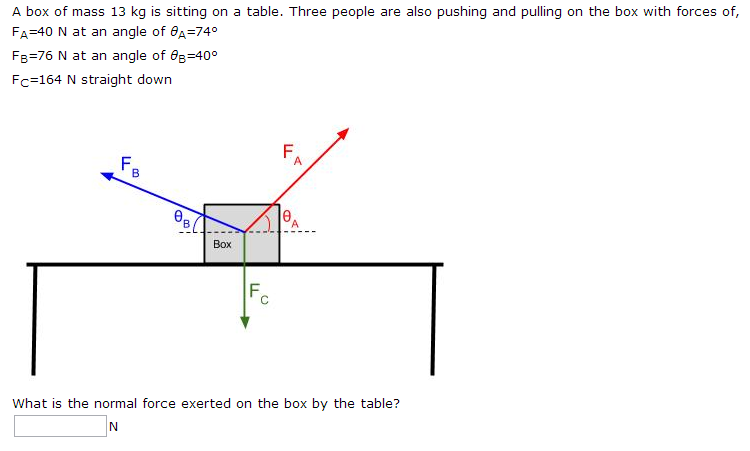

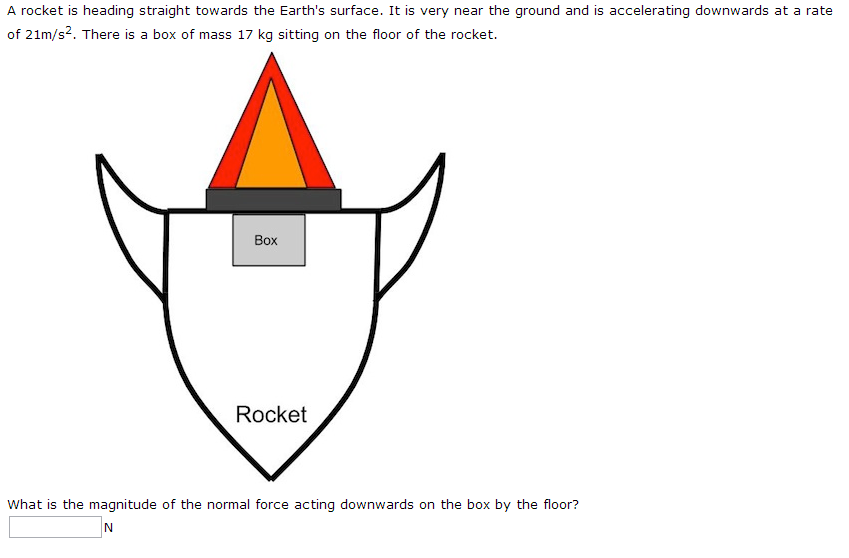
The progression of problems I developed has students first fully understand how to use Newton's Second Law when all forces are given. It takes them through many different scenarios, and always builds on the previous problem by adding difficulty or a single new element at a time. Then, and only then do we move on to talking about particular forces (Normal force, tension, friction, inclines) and how to analyze them one at a time. Basically I'm delineating between the different micro-skills the students need in order to solve difficult force problems, and having them master each skill in a logical progression before trying to put them all together.
If you subscribe to the philosophy that students actually do the majority of their learning when they are solving problems and answering questions on their own, then it makes sense to spend the most time crafting the best possible sequence of questions and problems for them to do. It seems like many educators and textbook publishers focus 90% of their effort on the delivery of the material, and 10% on the problems sets and questions to ask. It always struck me as weird that the chapter text portion of a physics textbook follows a nice organized logical progression where each section builds off the previous one, but the problems sets for the most part have no logical progression. The problem sets are organized into sections like "Tension", but one problem is hard then the next is easy, one problem requires this skill, then the next problem requires a different skill. Just cause all problems are under the heading of "Tension", does not mean that there is only one skill to master.
Students seem to really appreciate using these progressions of problems since they can see themselves making progress instead of feeling like every new problem requires a whole new set of skills that makes them start all over again. Once students have made it to the end of all the incremental progressions, I give them a set of random problems in no logical order that require all skills in random ways to make sure they can apply what they know even when it might not be obvious what to do.
By doing using these progressions of problems, my students this year have shown a level of mastery of this material that I didn't think was possible. My students are now quickly able to handle complex problems that students from previous years would have never dared to even try.
Here's a sampling of a few problems from the various progression sets that would have made students from previous years freeze up and possibly break down in tears, but most of my students now handle with ease,
Saturday, November 9, 2013
The Importance of Vocabulary
In the Modified-Flipped Algebra classroom one of the challenges has been teaching the students how to learn differently. In the beginning of the quarter, the students notes were looking far better than if taken during class. They were writing down the vocabulary and the example problems. In the second quarter, I noticed that their notes were not including as much vocabulary as I would like. In addition, when I would ask about vocabulary during class, most could not give me an explanation of the term or how they went from one step to the next.
I wonder if this has to do with the material becoming more challenging and the students are not as familiar with the terms as at the beginning of the year when there is a lot of review. The vocabulary is explained during most of the videos, however, most students do not write down the explanation of the term. Instead they copy the screen with all the mechanics. Again, I think this is a matter of the students learning what is important to put in their notes.
With this challenge in mind for me, during the last couple weeks, I have tried to improve the vocabulary content by discussing how important it is to write down the definitions in their notes as well as the mechanics. Students notes are slowly becoming more precise with the vocabulary. I needed to spend time explaining the importance of knowing the how and why they achieve the next step. This involves understanding all the terms.
In addition to this, I have added questions to their homework assignments. The questions require the student to think and use the vocabulary. In the past, I would begin the class with these questions but I have found it beneficial if the student prepares for the question the night before the content is practiced in class.
Subscribe to:
Posts (Atom)