Saturday, December 7, 2013

End of semester thoughts

We are finishing up our first semester in Honors physics. Here are some if the pros and cons that I have noticed during the first semester in using the blended format of instruction:

Pros

  1. Since students in the blended section have an independent "Library day" about every other day, I've been able to individualize instruction for students better. During "Library Days" most students go to the library to work independently, but if a student has missed class or needs extra remediation, I've allowed them to stay with me in the class and address any issues that they have in an individualized way. Admittedly, the fact that the blended section is so small (7 students) helps a lot with being able to give personal attention to each student.
  2. Most students are still pretty happy about "Library Days" where they can complete work independently or with each other in the Social Learning Commons. 
  3. Anecdotally it seems like the students in my blended Honors physics section are becoming more independent learners compared to the students in my traditional Honors physics sections. They still ask questions, but they are more willing to try and figure out how to fix the problem first on their own, before they ask me. I have no actual statistic to back this up, but that's the impression I get.

Cons

  1. Some students still don't like learning from the Khan Academy physics videos. Some of this may owe to the fact that I haven't been having them watch all the Khan videos on a topic. I've selected the ones most pertinent to the ideas we're developing. Since the Khan Academy physics videos are somewhat sequence based, and one video flows directly from the last video and into the next video, having them watch only some of the videos might be giving them a disjointed experience that is less enjoyable. The problem is that since each Khan Academy video is about 10 minutes, I can only have them watch about one or two during their "Library days" or else there would be no time for them to try any sample problems during that time. I suppose I could have them just watch videos for a whole library day, but 55 minutes of lecture (no matter who is lecturing or whether it is on video or not) is a long time to ask a student to maintain their attention span (and one could make a case that doing so is more akin to child abuse than education). 
  2. The Braingenie site and problem sets are great for the most part. But a few Braingenie problems are worded vaguely or just plain incorrectly and the site at times is a little buggy. Giving students problems that are worded vaguely is not useful to my purposes. The most important thing I am trying to teach my students is to be able to think clearly, precisely, and in an organized manner. So being precise is very important for the educational goals I've set for my students. In fact, helping my students think clearly/precisely and in an organized manner to me is much, much more important than any physics topic or equation that they will learn about. (I give my students extra credit if they can point out any time I've been imprecise/vague in the questions I've asked them. I am never so pleased/proud during the school day as I am when one of my students calls me out on being vague/imprecise.)
  3. The grades for the blended section during first quarter were higher than the traditional sections, but the second quarter grades for the blended section are no longer the highest of all the physics sections (they aren't the lowest either). I am pretty sure that the cause for the drop is student absences and missed assignments and missed classes that are forcing students to catch back up. I expect that in the last couple weeks we will see the grades for the blended section rise back to equal or greater than the other sections.
I have one more interview exam to give. My blended section did not receive the highest scores (or lowest scores) during the last interview exam, so I am interested to see how they do this time.

To me the biggest test for whether this blended class has been a success or not will be the performance of the students on the semester I exam, since it is a sampling of everything we've done this quarter. Every Honors physics section (blended or otherwise) will take the same semester exam at the same time in the same large area. I am interested to see how the blended section semester I exam scores compare with the rest of the traditional Honors physics sections.

Wednesday, December 4, 2013

Flipping by Learning Styles

Flipping by Learning Styles

In Money, Banking and Finance we've been trying to a blend direct instruction, small group work, and independent learning through technology into a proficient pedagogy. In this past unit I employed the following teaching strategies:

1) Direct Instruction with application problems included within lectures.

2) Students alternating days in the classroom.

3) Small tutor sessions after lecture to allow for individual attention.

4) Use Khan Academy as a support tool to provide students with more context.

As most of our classwork was collaborative, the unit assessment was a group project.

Results:

What developed from the above goals was a class divided into two small groups that would engage in discovery based lectures followed by a set of application problems.  The two groups were divided based on learning styles, one more traditional (Group 1), the other more hands on (Group 2).

The results for both groups were the same in class.  They were able to replicate and discover the key concepts in the same amount of time with tantamount proficiency.  Sometimes Group 1 would see me on alternating days, and other days the groups would split the period in half, with the other 30 minutes being spent in the learning commons working on problems.

Application problems were completed in the manner requested, which was for students to work through the problems in enough detail to allow for discussion the following class.

We did not use as many videos as I would have liked.  In this next unit I'm going to stress note- taking skills in conjunction with the videos and readings.

The unit assessment provided some challenges.  Group 1 was able to succeed with few hurdles.  Group 2 encountered some confusion with the assignment as well as some challenges with staying productive in an independent environment.

Moving Forward:

This next lesson will pedagogically will focus on the following:

-Instructing independent learning skills (note taking, reviewing, practicing problems)
-Study skills as we review for the final exam (using videos from Khan Academy, reading entire questions, consulting notes in the study process, asking a classmate, searching the web)
-Continuing to divide the class by learning styles with intensive discovery based direct instruction.
-As an instructor, writing assignment prompts with more clarity.


Sunday, November 24, 2013

Working within the Textbook

I still hear an audible "yes!" when the students realize they have online homework.

In my class we are focusing on using Khan content when it fits with our Saxon math book. Saxon breaks down the content so incrementally that a lot of the times the videos and exercises on Khan are too advanced for what we are teaching the students. This is why I am only able to find lessons that fully fit, every once in a while. I am able to find topics that partially fit about once to twice a week, and some weeks I am not able to find ones that fit at all. That being said, when I am able to use this method, my students seem more engaged in the math lesson and seem to grasp the concepts more fully.

I was elated the other day when a parent came up to me and told me, "Khan has made it so that my son is excited about math. Before this year, he was doing only what was required of him in math. I was wondering what he was doing on the computer one evening and when I saw it was math I was excited."

Friday, November 22, 2013

Micro-skills

We haven't been using the Khan videos as much for this section on Newton's Laws and Forces. I feel like the progression of videos and sequencing of material given in the Khan videos for this chapter are inefficient in helping my students attain the level of mastery that I am looking for. Similarly, the Braingenie problem sets have had errors lately, so I've mostly been relying on having the students work through the progression of problems that I programmed over the summer.

The progression of problems I developed has students first fully understand how to use Newton's Second Law when all forces are given. It takes them through many different scenarios, and always builds on the previous problem by adding difficulty or a single new element at a time. Then, and only then do we move on to talking about particular forces (Normal force, tension, friction, inclines) and how to analyze them one at a time. Basically I'm delineating between the different micro-skills the students need in order to solve difficult force problems, and having them master each skill in a logical progression before trying to put them all together.

If you subscribe to the philosophy that students actually do the majority of their learning when they are solving problems and answering questions on their own, then it makes sense to spend the most time crafting the best possible sequence of questions and problems for them to do. It seems like many educators and textbook publishers focus 90% of their effort on the delivery of the material, and 10% on the problems sets and questions to ask. It always struck me as weird that the chapter text portion of a physics textbook follows a nice organized logical progression where each section builds off the previous one, but the problems sets for the most part have no logical progression. The problem sets are organized into sections like "Tension", but one problem is hard then the next is easy, one problem requires this skill, then the next problem requires a different skill. Just cause all problems are under the heading of "Tension", does not mean that there is only one skill to master.

Students seem to really appreciate using these progressions of problems since they can see themselves making progress instead of feeling like every new problem requires a whole new set of skills that makes them start all over again. Once students have made it to the end of all the incremental progressions, I give them a set of random problems in no logical order that require all skills in random ways to make sure they can apply what they know even when it might not be obvious what to do.

By doing using these progressions of problems, my students this year have shown a level of mastery of this material that I didn't think was possible. My students are now quickly able to handle complex problems that students from previous years would have never dared to even try.

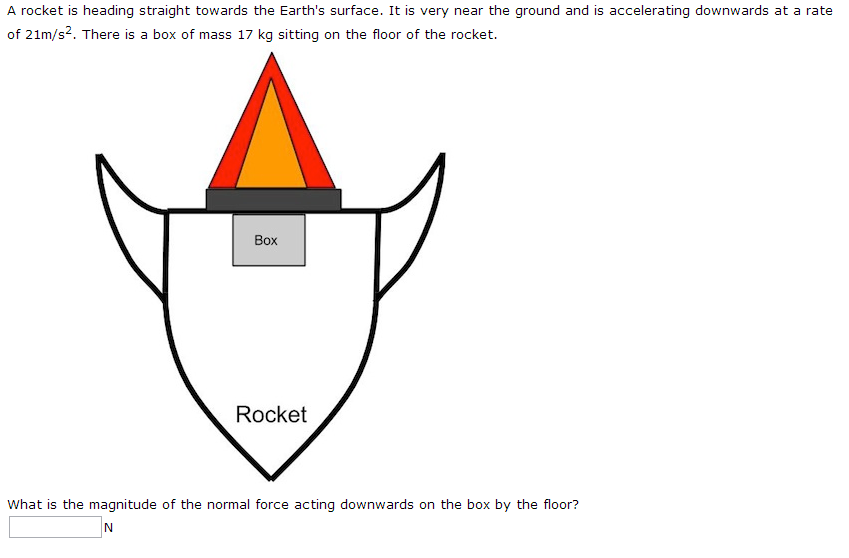
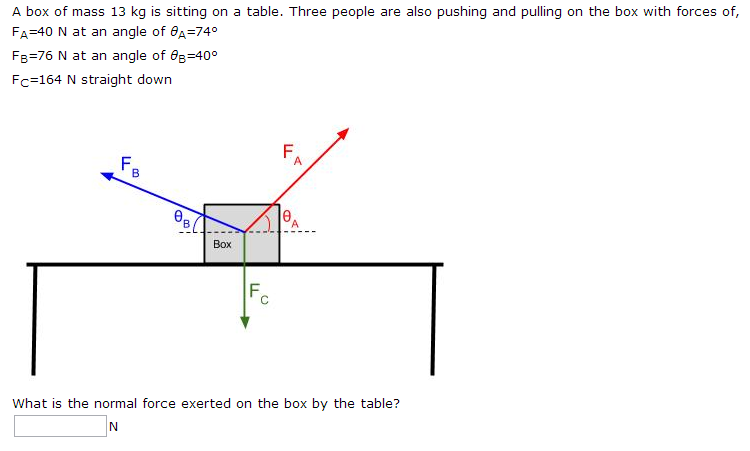
Here's a sampling of a few problems from the various progression sets that would have made students from previous years freeze up and possibly break down in tears, but most of my students now handle with ease,


Saturday, November 9, 2013

The Importance of Vocabulary

In the Modified-Flipped Algebra classroom one of the challenges has been teaching the students how to learn differently.  In the beginning of the quarter, the students notes were looking far better than if taken during class.  They were writing down the vocabulary and the example problems.  In the second quarter, I noticed that their notes were not including as much vocabulary as I would like.  In addition, when I would ask about vocabulary during class, most could not give me an explanation of the term or how they went from one step to the next.  

I wonder if this has to do with the material becoming more challenging and the students are not as familiar with the terms as at the beginning of the year when there is a lot of review.  The vocabulary is explained during most of the videos, however, most students do not write down the explanation of the term.  Instead they copy the screen with all the mechanics.  Again, I think this is a matter of the students learning what is important to put in their notes.

With this challenge in mind for me, during the last couple weeks, I have tried to improve the vocabulary content by discussing how important it is to write down the definitions in their notes as well as the mechanics. Students notes are slowly becoming more precise with the vocabulary.  I needed to spend time explaining the importance of knowing the how and why they achieve the next step.  This involves understanding all the terms.

In addition to this, I have added questions to their homework assignments.  The questions require the student to think and use the vocabulary.  In the past, I would begin the class with these questions but I have found it beneficial if the student prepares for the question the night before the content is practiced in class.

Tuesday, November 5, 2013

More labs and more ...

At the end of the first quarter, I had a discussion with my students about their perception of 'how things were going' in the hybrid organic class".  Their reactions and some of the adjustments for the class are:

1.    They commented that they were learning from the video, could do the problems associated with the lesson but they were unsure as to the 'when and why' associate with applying the information in the lessons.  So we are now having pre- and post assignments for the topics.  FYI: The pre-assignments are a new addition in the class format.  I am hoping it will give the students a better understanding of how they would integrate the information or skill set into what they have already learned and understand the implications of the information.
2.    They also wanted more review material integrated into the homework.  Easy enough to solve, I am now developing assignments which are more like an emerging final exam for them to work on.
3.    Whenever I have gone to the library to check on what is going on, I observe that they are using the Khan site in a collaborative setting, they discuss what is going on, they work together on the associated hand-out information but they were not checking to ensure that everyone was ‘on-board’ before they moved on to another topic and these students are not aggressive enough with their peers to get them to go over the material once again.  This has resulted in several students not really mastering the concept which is problematic.  I am not really sure what exactly to do about this since there are the issues of peer pressure and self-image – simply put, the students do not want to appear less bright in front of their classmates. Unfortunately, Adam’s suggestion would not work well in this class since we need to do experiments in our together time.  This leads into the last point of lab time.

4.    The students want to do more labs; in fact they want to do experiments whenever the class formally meets with me.  Unfortunately, I had to tell them that this is not possible since I need to make sure they know what they are doing before they can do it.  I would suggest that this strong desire to engage in hands on experiences is one of the major differences between students in high school and students in college.  College students want to do the work theoretically since it is less time consuming while high school students want to do labs – this is the part of the learning that they most enjoy, remember and WANT to do.  I am making a concerted effort this quarter to try and do more lab work with them and I am developing shorter versions of the experiments to fit more of them into the schedule to meet the students request for this experience.

Friday, November 1, 2013

"Wait? What the heck is the CPI?"

"Mr. B, what the heck is the CPI again?"  I heard this question numerous times over the past few weeks.  After watching assigned several resources, students "should" have known the definition of the CPI.  However, students were still struggling to grasp the vocabulary.  I encouraged them to look it up, to re-watch the video.  "Mr. B, I need to talk about it with somebody in class.  It doesn't make sense unless I talk about it myself."  What I noticed was that students needed application immediately upon learning a concept.  Application solidifies a concept.

Over the last two-three weeks, the Money, Banking and Finance flipped class focused on using intensive tutoring sessions to learn concepts.  In addition to students receiving direct instruction from Khan Videos and digital resources, those who understand the material were allowed to move at their own pace.

Many students flourished.  However, what quizzes and exam showed was that students really need application with vocabulary that is identical to their direct instruction.  When students were given application problems with synonyms for key vocab instead of the same term used in class, they became confused quite easily (two days lost to reteaching).  However, when the vocabulary was aligned consistently from direct instruction/Khan Videos with the assessments, students performed better.


Student comments included the following:
"I like the flipped model where we can work independently if we get the concept."
"I like it when you (Mr. B) lecture because it makes more sense."
"I get confused by having numerous different resources discuss things in different ways."
"I need practice problems to understand the concept during the videos."
"Reading a text makes more sense than the Khan Video or lecture because I can move at my own pace."

For this next unit, I'm going to try the following:
-Lecturing as a means of direct instruction.  I'll build application problems into the lectures.
-Students will still alternate days with me an in the learning commons.
-After lecture, we will break into a tutor session.  Students who want to work independently will be allowed to do so in either my room or the learning commons.  Students who need additional help will stay in the classroom.
-I'm going to use Khan Academy as a support tool to provide students with more context after I've introduced the material.